

.svg)
Introduction
When Medical Affairs teams encounter challenges, the first instinct is usually to look for a new solution.
A new platform. A new dashboard. A new project management tool. I’ve inherited enough trackers in my career to know that another tracker isn’t always the answer.
But after spending a few years working across Medical Information, Medical Affairs and now Medical Operations, I’ve noticed that the systems aren’t usually the problem. Most organisations will already have an entire catalogue of sophisticated systems. The problem actually tends to be that nobody is quite sure of how all the different functions work, or how decisions made in one team impact everyone else downstream. They don’t have enough clarity on how the work actually gets done. From what I see, that’s more of an operational readiness problem.
A lot of teams already have the tools they need. But when they don’t know how each department, decision or role heavily impacts the other, the symptoms look the same:
· Teams are working hard but still feel overwhelmed
· People are struggling to understand priorities, so projects move slower than planned
· Accountability isn’t clear and important decisions get delayed

Now that I’ve moved into Medical Operations, I’ve realised that the same thing is happening at an organisational level. Teams feel stuck and look for a new solution. But the struggle isn’t the tools, it’s that the work is becoming harder to navigate as organisations grow. Processes evolve, responsibilities shift, and people start finding their own little workarounds just to get the job done. More trackers, more reporting, more meetings.
Individually, these aren’t huge problems. But collectively, it creates this complexity around the operating model that means that everyone is working in slightly different ways. And decisions that seem minor create a ripple affect across teams without anyone realising until something gets delayed.
I’ve spent a lot of time speaking to Medical Affairs teams recently and the common reaction has been “do we need a new tool?” rather than "what problem are we actually trying to solve here?"
And in my opinion, the only question that should be asked is “Is our operating model enabling success or slowing things down?” That’s the question at the heart of operational readiness. The platform isn’t causing the bottleneck; the process is.
In my experience, this is where operational readiness becomes really important. Not because it’s a new process to follow, but mainly because it forces people to stop and look at how work is actually moving through the organisation. You need to look at the ways of working. Ask the questions that matter.
How are decisions made?
Who owns what? Do we have clarity of responsibilities?
Where are projects getting stuck? Is work flowing efficiently between functions?
Do people know where to find the information they need?
Are we solving the right problem?
Those conversations aren’t as exciting as a new platform, but they’re usually where the biggest improvements come from. If the underlying operational foundations aren't working, even the best strategy becomes harder to execute.
The organisations that seem to navigate growth best aren't necessarily the ones with the shiniest technology. They're the ones where people understand how things get done. The ones with a robust operational framework that supports every eventuality and protects progress in the face of an industry that is constantly fluctuating.
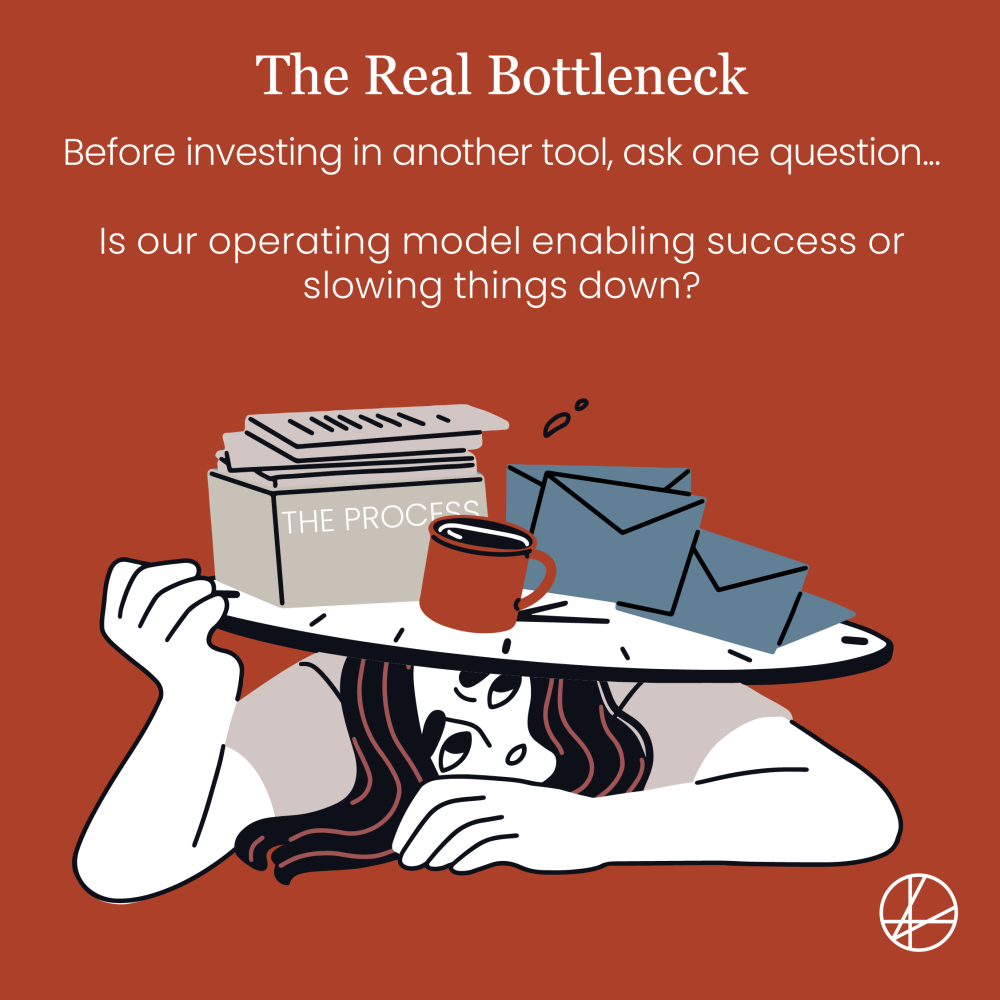
As Medical Affairs continues to evolve, I think that's a conversation we'll be having more and more often. We’ll see new tools, new platforms and even new ways of working. Some of them will be genuinely transformative. But before investing the budget and energy into the next solution it might be simpler to ask:
What problem are we actually trying to solve?
It’s been a really interesting journey filled with valuable insights, and I'd love to hear what others are seeing.
When operational challenges arise in your organisation, what's usually the root cause?

